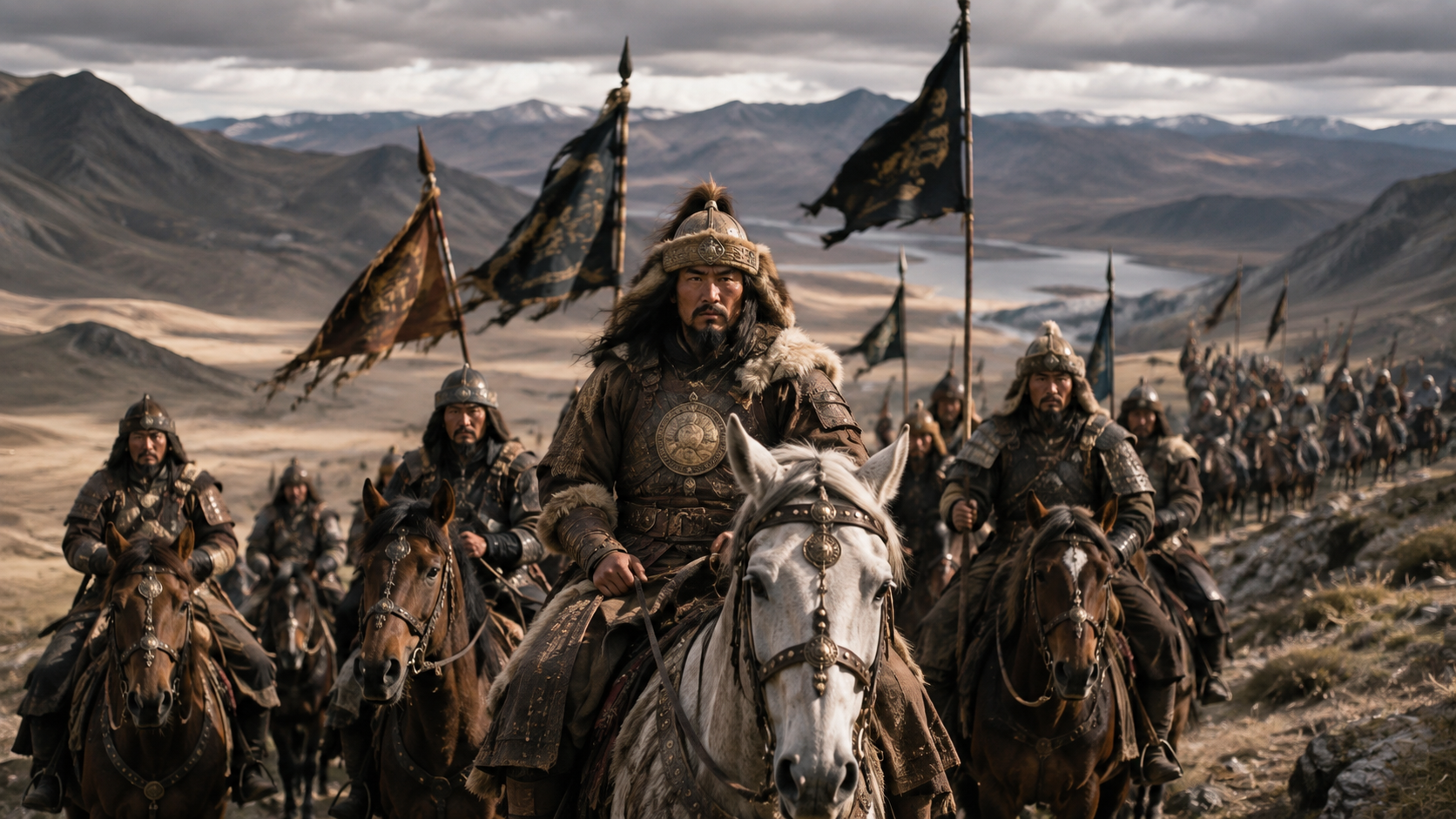
In the 13th century, armies from the Mongolian steppe began moving across Asia with extraordinary speed. Within a few decades, territories stretching from China to the Middle East had fallen under Mongol control. For people living across the continent, the arrival of the Mongols could mean war, destruction and fear, but it could also open new connections between distant regions.
The Mongols came from a world shaped by the harsh environment of the Eurasian steppe. Life there demanded mobility, discipline and a deep knowledge of horses and open terrain. Instead of building their power around large permanent armies, Mongol leaders could move thousands of mounted warriors across enormous distances with remarkable speed.
Genghis Khan became the central figure in this transformation after uniting several Mongol and Turkic groups under his leadership. His rise was not simply the story of one ambitious conqueror taking over the steppe. He built a political and military system that could absorb defeated groups and turn former enemies into soldiers, administrators and allies.
The first major campaigns pushed Mongol power beyond the traditional steppe world. Cities and kingdoms in northern China, Central Asia and parts of the Islamic world suddenly faced armies that could appear far from their expected line of attack. The speed of these campaigns often left rulers struggling to understand the scale of the threat approaching their borders.
Central Asia experienced some of the most dramatic changes. Major cities such as Bukhara, Samarkand and Merv became targets during the Mongol expansion, and some communities suffered enormous destruction. Yet the Mongols did not simply erase the urban world they encountered, because they quickly recognized the value of merchants, craftsmen, scholars and administrators.
That contradiction sits at the heart of Mongol history. The same empire responsible for devastating cities also created conditions that encouraged movement across large parts of Eurasia. Once territories were brought under Mongol rule, merchants could sometimes travel across political boundaries with greater security than they had experienced during earlier periods of fragmentation.
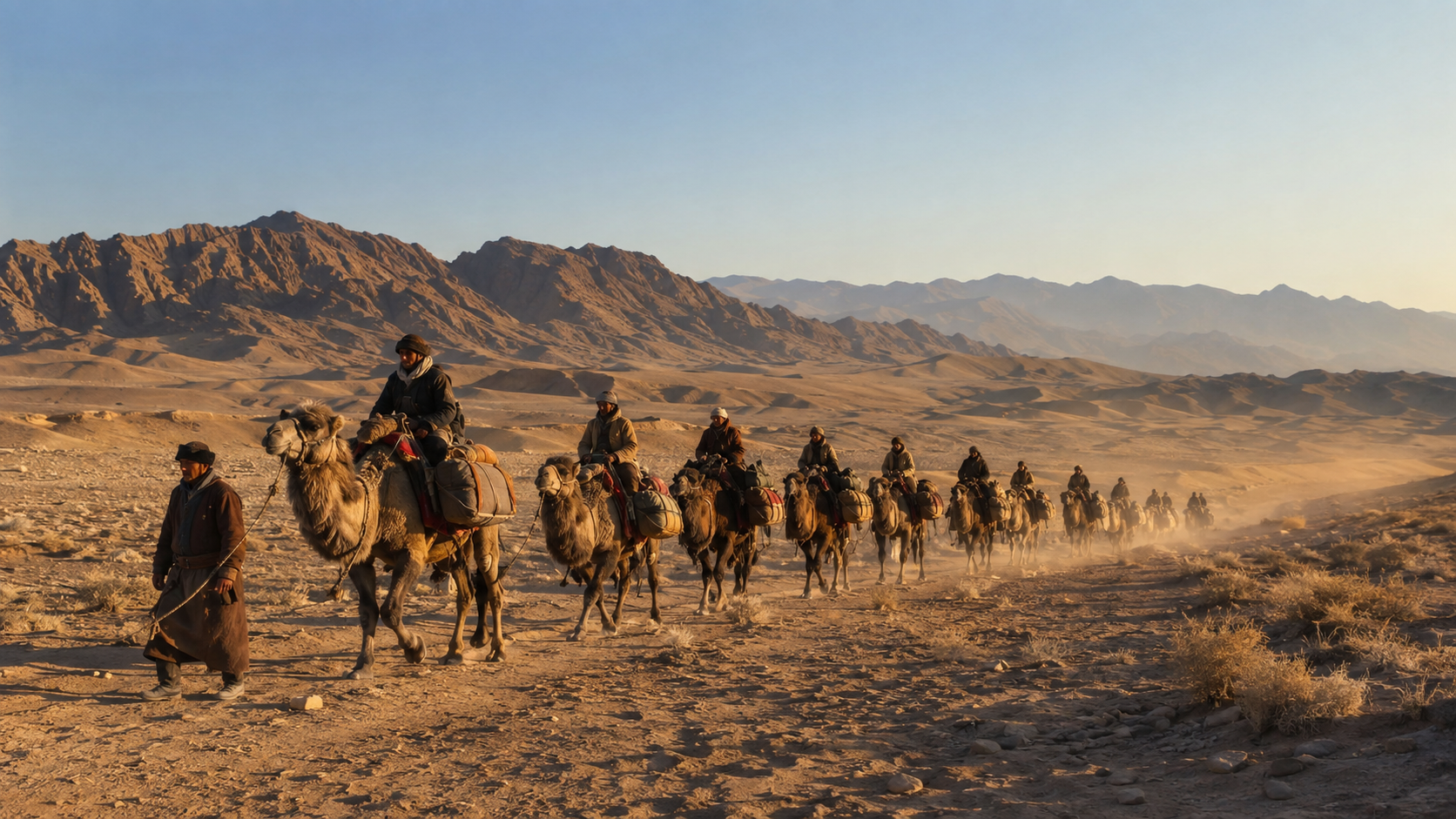
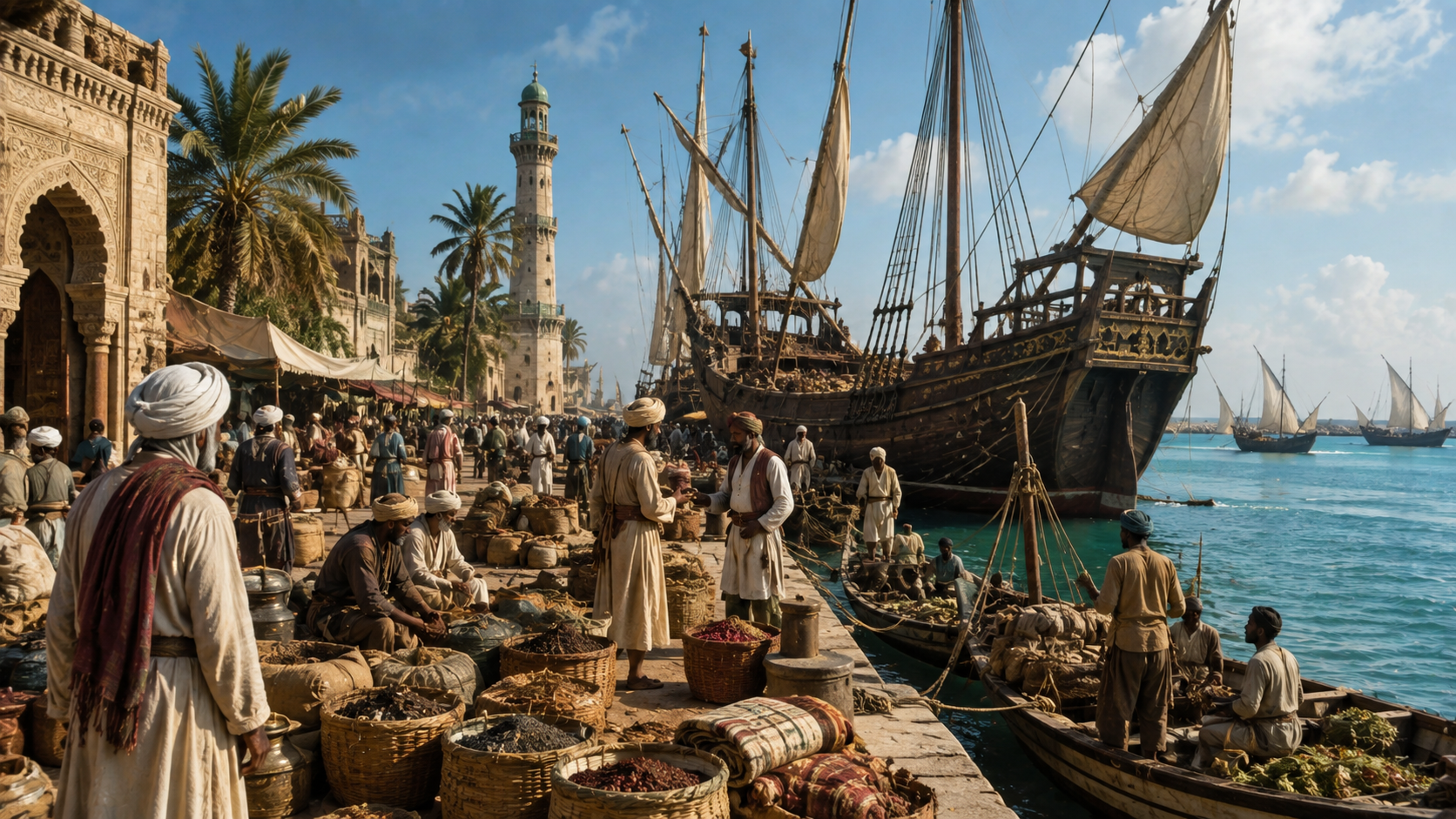
Trade therefore became closely connected to Mongol power. Caravan routes linking China, Central Asia, Persia and the Black Sea became part of a much larger commercial system. Silk, spices, metals, textiles, horses and other goods moved between regions that had previously been separated by rival states and dangerous borders.
People moved with those goods. Merchants from distant cities established communities along major routes, while translators, religious figures and craftsmen followed the opportunities created by expanding trade. You could enter a major city under Mongol rule and encounter people whose origins were separated by thousands of miles.
The exchange of knowledge also accelerated. Chinese technologies and administrative practices reached western parts of the Mongol world, while scientific and medical knowledge from the Islamic world moved toward East Asia. Mongol rulers employed specialists from many different backgrounds, giving skilled people reasons to travel far beyond their original homes.
The empire also became a bridge between political and cultural worlds that had previously known little about one another. European travelers could reach parts of Asia that had once seemed almost impossibly distant. Reports from figures such as the Franciscan missionary William of Rubruck offered European audiences glimpses of Mongol society, Central Asia and the wider Asian world.

But this period of connection came with enormous human costs. Mongol campaigns destroyed cities, displaced populations and caused large-scale deaths across several regions. The effects varied from one place to another, and communities experienced Mongol rule very differently depending on whether they resisted, surrendered or became useful to the new authorities.
The Mongols also relied heavily on the knowledge of the people they conquered. Chinese engineers helped with siege warfare, Persian administrators managed government affairs and skilled craftsmen were transported across the empire. Conquest could therefore create a strange form of forced globalization, with expertise taken from one region and put to work thousands of miles away.
The empire eventually divided into several major political centers. The Yuan dynasty ruled China, while other Mongol states controlled territories across Central Asia, Iran and the Russian steppe. These states developed their own political identities, even though their rulers shared a common Mongol heritage and continued to maintain connections across the wider Eurasian world.
Over time, the political unity of the Mongol Empire weakened. Internal rivalries, succession disputes, local resistance and changing economic conditions made it increasingly difficult to maintain control over such enormous territories. Yet the networks created during the Mongol expansion did not disappear as quickly as the empire itself.
The legacy can still be seen in the history of cities, trade routes and cultural exchanges across Asia. Mongol rule changed the political map, but it also altered the movement of people, information and goods across the continent. For a time, an empire born on the steppe had brought an unusually large part of Asia into the same historical conversation.