When the sun goes down across Indonesia’s busiest cities, another side of the food scene begins to wake up. Small carts roll onto sidewalks, portable stoves start burning, and the smell of grilled meat, fried snacks, and spicy sauces begins drifting through the streets. For many Indonesians, this is not simply late-night dining but a familiar part of everyday city life.
Street food has a special place in Indonesia because it brings together convenience, affordability, and an incredible variety of flavors. A single street can offer everything from steaming bowls of noodles to crispy fried snacks and smoky grilled chicken. The food may be served from a tiny cart, but the flavors can be just as memorable as anything found in a restaurant.

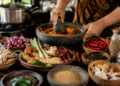
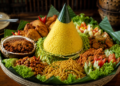
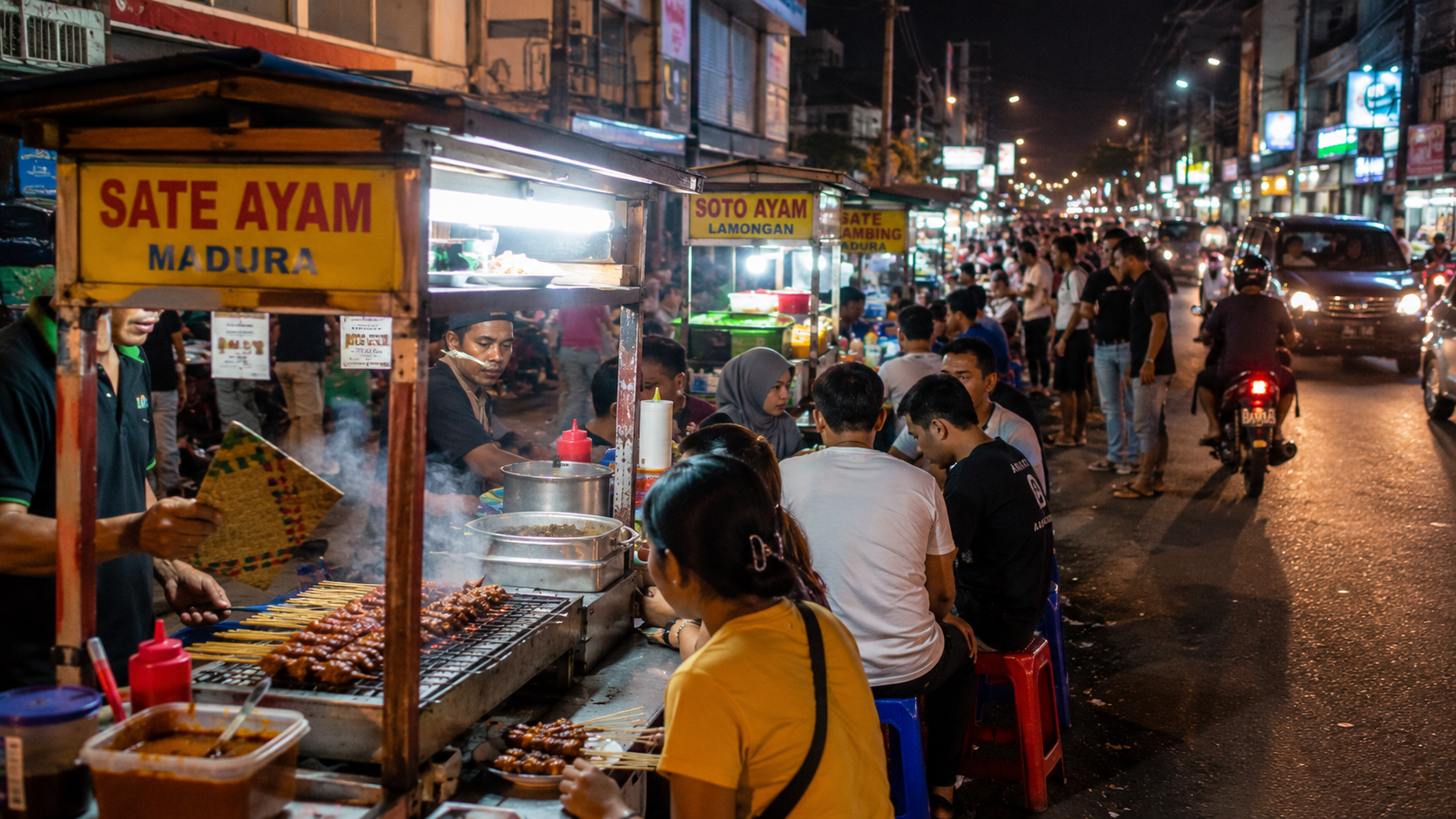
One of the most recognizable sights is the gerobak, a small food cart that can be pushed from one location to another. Some are surprisingly simple, while others are equipped with gas stoves, grills, glass food displays, and rows of ingredients ready to be cooked. As evening arrives, these carts can turn an otherwise quiet roadside into a lively informal dining area.
Among the most familiar street foods is bakso, a comforting bowl of meatballs served with noodles, vegetables, broth, and sometimes crispy wontons. Vendors often prepare the ingredients throughout the day before serving steaming bowls to customers in the afternoon or evening. The combination is simple, warm, and filling, making it a favorite across generations.
Then there is nasi goreng, the Indonesian fried rice that seems almost perfectly designed for street food. Rice is quickly tossed in a hot wok with garlic, shallots, sweet soy sauce, chilies, and other ingredients before being topped with eggs, chicken, seafood, or crispy crackers. The sound of the wok and the aroma of caramelized soy sauce can be enough to attract customers from several meters away.
Grilled foods bring an entirely different atmosphere to the street. Sate vendors thread pieces of meat onto bamboo skewers before grilling them over glowing charcoal, creating smoke that mixes with the sweet aroma of peanut sauce. The cooking happens directly in front of customers, turning a simple meal into a small piece of street-side theater.
Fried snacks are another essential part of the experience. Gorengan can include fried tofu, tempeh, bananas, cassava, vegetables, and other ingredients coated in a light batter before being dropped into hot oil. They are inexpensive, easy to share, and commonly eaten with fresh chilies or a simple dipping sauce.
What makes Indonesian street food particularly interesting is how strongly it reflects local tastes. The same basic dish can change significantly from one city or region to another, with differences in spice, sweetness, ingredients, and cooking techniques. A street food vendor is therefore often serving more than a familiar recipe; they are carrying a small piece of local food culture.
The atmosphere around these vendors is just as important as the food itself. Customers may sit on plastic stools beside a busy road, gather around a small table, or simply stand nearby while waiting for their order. Motorbikes pass, conversations overlap, and the sound of cooking becomes part of the background, creating an experience that feels distinctly connected to the city.
Street food also provides an important bridge between generations. Parents who grew up eating from roadside vendors often introduce the same dishes to their children, allowing familiar flavors to survive even as cities rapidly change. New cafés and modern restaurants may continue to appear, but the humble food cart remains a familiar presence outside them.
In Indonesia’s busiest cities, street food continues to prove that memorable dining does not require an expensive room or an elaborate menu. Sometimes it begins with a small cart, a smoky grill, a hot wok, and a vendor who has spent years perfecting a recipe. As the city gets louder after dark, these simple roadside kitchens keep serving the flavors that make Indonesian streets feel alive.