There is something about Indonesian food that can make an ordinary meal feel like a celebration, and it often starts with one simple dish. Nasi tumpeng is a striking cone-shaped mound of yellow rice surrounded by an assortment of colorful side dishes, and it has long been more than just something placed on a dinner table. Its shape, presentation, and cultural meaning have turned it into one of Indonesia’s most recognizable traditional dishes.
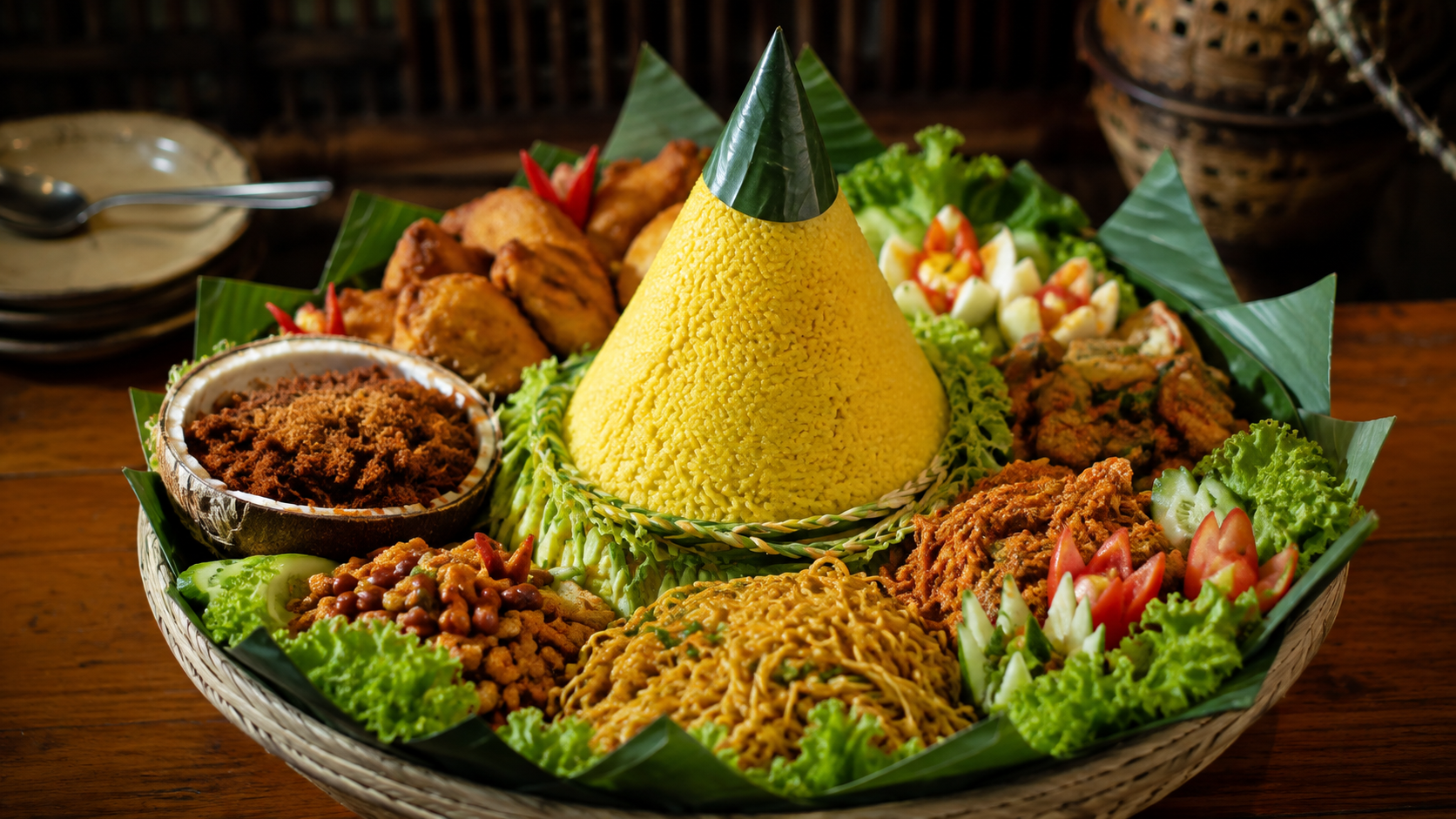
At first glance, nasi tumpeng looks almost too beautiful to eat. The rice is traditionally shaped into a tall cone, while vegetables, eggs, chicken, tofu, tempeh, and other dishes are arranged around it like a small edible landscape. The combination can make a simple gathering instantly feel more special, even before anyone takes the first bite.
The rice itself is usually prepared with turmeric, giving it the bright golden color that makes tumpeng so easy to recognize. Coconut milk and aromatic spices can also be added, creating a rich fragrance that fills the room long before the dish reaches the table. Every element may look decorative, but together they create a meal that is meant to be shared.
That sharing is an important part of what makes nasi tumpeng different from an everyday plate of rice. The dish is often prepared for celebrations, ceremonies, birthdays, community gatherings, and other important moments. Instead of serving food separately to each guest, the tumpeng becomes the center of the table, bringing everyone around the same meal.
Its cone shape also carries a deeper meaning in Javanese tradition. The pointed mound is commonly associated with mountains, which have long held an important place in traditional beliefs and cultural symbolism. The rice is therefore not simply shaped that way because it looks impressive, but because the presentation itself can represent hopes, gratitude, and a connection between people and their surroundings.
Around the rice, the side dishes create a completely different kind of visual experience. There might be fried chicken, boiled eggs, vegetables, tempeh, tofu, sambal, shredded coconut, and other regional specialties depending on the occasion and the cook. This means no two tumpeng meals necessarily look or taste exactly the same, even when they follow the same basic tradition.

The dish has also changed with modern Indonesian dining culture. Restaurants and catering businesses now create smaller individual versions, while contemporary chefs sometimes experiment with different ingredients and presentation styles. The traditional cone remains instantly recognizable, but its role has expanded beyond formal ceremonies and into birthdays, office celebrations, weddings, and casual family events.
What makes nasi tumpeng especially fascinating is the way food, celebration, and storytelling come together on one plate. The rice provides the centerpiece, the side dishes bring different flavors and textures, and the arrangement gives the entire meal a sense of occasion. It is the kind of Indonesian food that can turn eating into an experience before the meal has even begun.
For many Indonesians, that experience is also connected to memories of family and community. Preparing a tumpeng can involve several people working together in the kitchen, while serving it often becomes a shared moment rather than a simple act of eating. That combination of food and togetherness helps explain why the dish continues to appear whenever an ordinary day needs to become something worth remembering.
Today, nasi tumpeng remains one of the clearest examples of how Indonesian cuisine can transform familiar ingredients into something much bigger than a meal. Its golden rice, colorful side dishes, and distinctive shape make it instantly eye-catching, but its real character comes from the traditions and celebrations surrounding it. Put a tumpeng in the middle of a table, and suddenly even a simple gathering can feel like a feast.