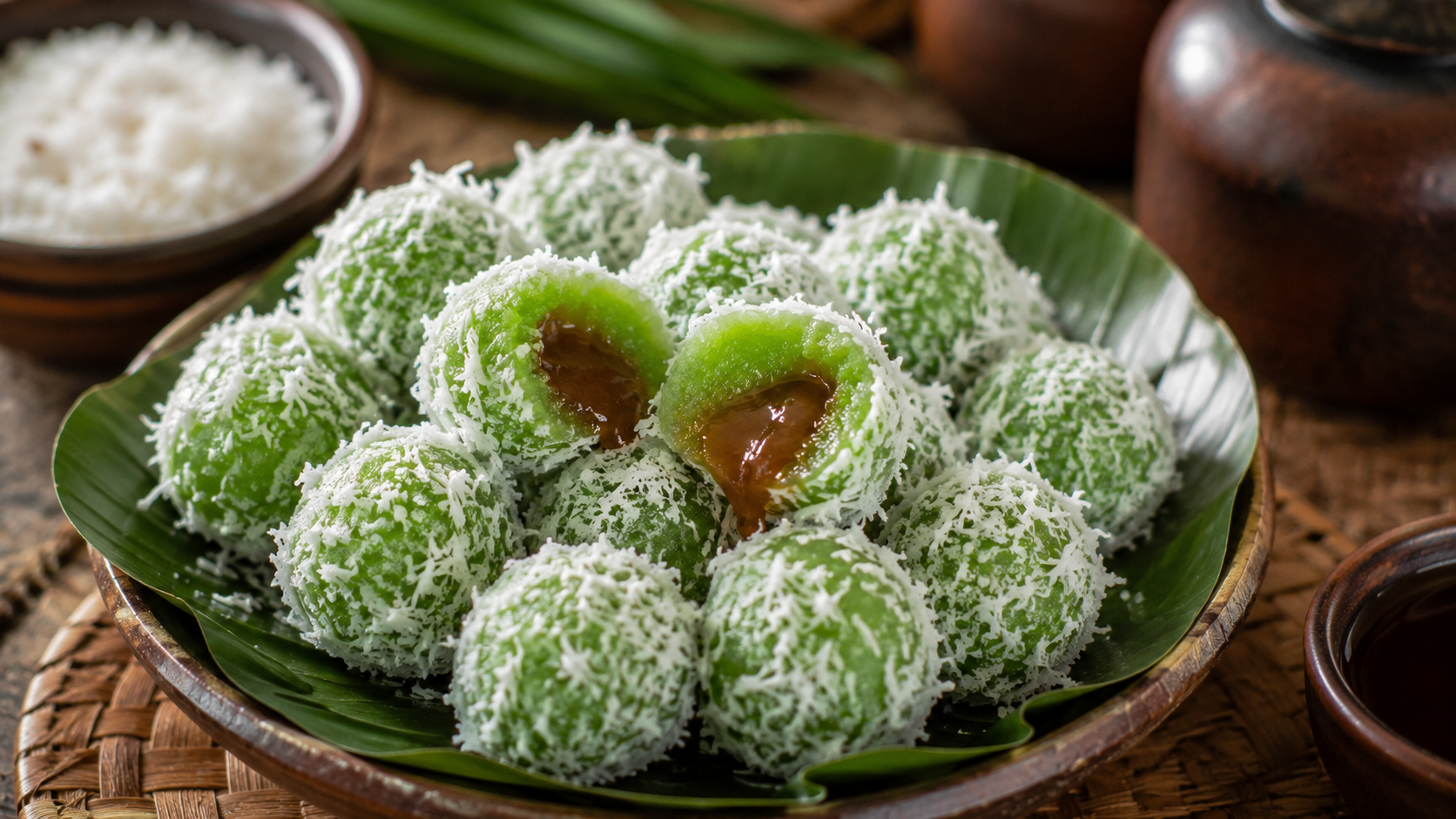
In Indonesia, some of the most memorable desserts are small enough to disappear in a single bite. Klepon is one of them: a bright green rice cake filled with melted palm sugar and coated in freshly grated coconut. It looks simple on a market tray, but breaking one open reveals a burst of warm sweetness that has made it a familiar favorite across generations.
The snack is traditionally made from glutinous rice flour mixed with pandan or pandan flavoring, which gives the dough its distinctive green color and fragrant aroma. Small pieces of the dough are shaped around palm sugar before being dropped into boiling water. Once they float to the surface, they are removed and rolled in grated coconut, creating the soft, chewy texture that defines klepon.
The first bite is where the contrast becomes most obvious. The outside is tender and slightly chewy, while the palm sugar inside melts into a thick, syrupy filling that can spill out unexpectedly. The coconut adds a mild savory note, keeping the sweetness from becoming too heavy.
Klepon has long been associated with traditional Indonesian markets, particularly in Java, where it is commonly sold alongside other jajanan pasar, or traditional market snacks. These foods were once a routine part of morning markets and neighborhood gatherings, displayed in baskets and trays rather than behind the glass counters of modern pastry shops. Their appeal came from familiar ingredients, affordable prices and recipes passed from one generation to another.
Its green color is perhaps the most immediately recognizable feature, but pandan does more than provide visual identity. The leaves have a distinctive fragrance that is deeply familiar in Southeast Asian cooking and frequently appears in Indonesian desserts, rice dishes and drinks. In klepon, that aroma meets the caramel-like flavor of palm sugar to create a combination that is unmistakably Indonesian.
The palm sugar itself is another important part of the snack’s character. Traditionally produced from the sap of palm trees, it has a deeper and more complex flavor than ordinary white sugar, with notes that can resemble caramel and toasted molasses. When heated inside the klepon, it turns into a liquid center that gives the small rice cakes their signature surprise.
There is also something theatrical about eating klepon, even though the snack is hardly elaborate. The thin green shell gives little indication of what is inside, and an overly enthusiastic bite can send hot palm sugar onto the fingers or plate. That small moment of surprise has become part of the experience, particularly for people who grew up eating the snack at home or buying it from traditional vendors.
Modern Indonesian food culture has given klepon new settings without completely changing its identity. Cafés and restaurants have incorporated its flavors into cakes, ice cream, pastries and other contemporary desserts, while traditional versions remain available in markets and neighborhood food stalls. The familiar combination of pandan, coconut and palm sugar has proved flexible enough to move from a paper-wrapped market snack to a dessert presented on a modern dining table.

For younger Indonesians, klepon can also represent a connection to a food culture that is changing quickly. Traditional market snacks compete with packaged sweets, international desserts and increasingly sophisticated café menus, yet klepon continues to appear because its ingredients remain accessible and its flavor is instantly recognizable. A small green rice cake can therefore carry a surprisingly large piece of everyday Indonesian food history.
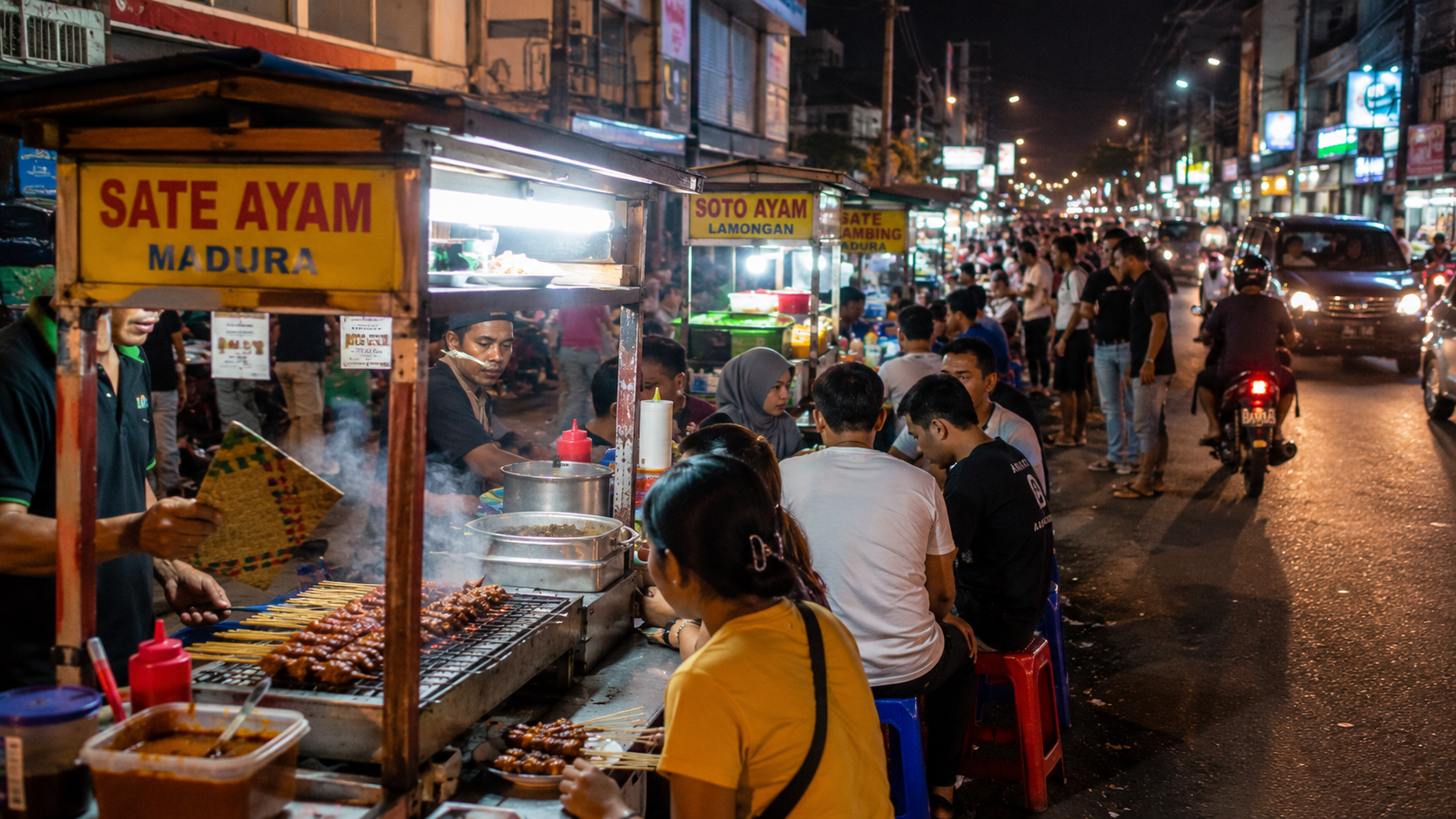
In a traditional market, the experience remains much closer to its roots. Klepon may sit beside steamed cakes, fried snacks and other colorful sweets, often arranged in simple baskets ready for customers passing through on their morning errands. The scene is less about presentation in the modern restaurant sense and more about the rhythm of buying food that families have known for decades